Oyenuga on Authorship Misappropriation
Oyenuga et al. (2026, Ethics & Behavior): You Put my name, I Put your name: exploring unethical practices in academic publishing using the authorship misappropriation Diamond framework.
In standard academic practice, authorship is generally reserved for individuals who have made substantial contributions to the conception, design, execution, or interpretation of research and who take responsibility for the scholarly output (Halappa et al., 2012, American Journal of Roentgenology). The International Committee of Medical Journal Editors has similar guidelines.
They identified five patterns:
- Transactional authorship
- Promotion-driven padding
- Hierarchical patronage
- Reciprocal name-exchange
- Unauthorized inclusion
These practices are shaped by three overarching themes:
- Uneven awareness of authorship standards
- Systemic institutional and financial drivers
- Entrenched hierarchical dynamics
They also introduce the authorship misappropriation diamond:
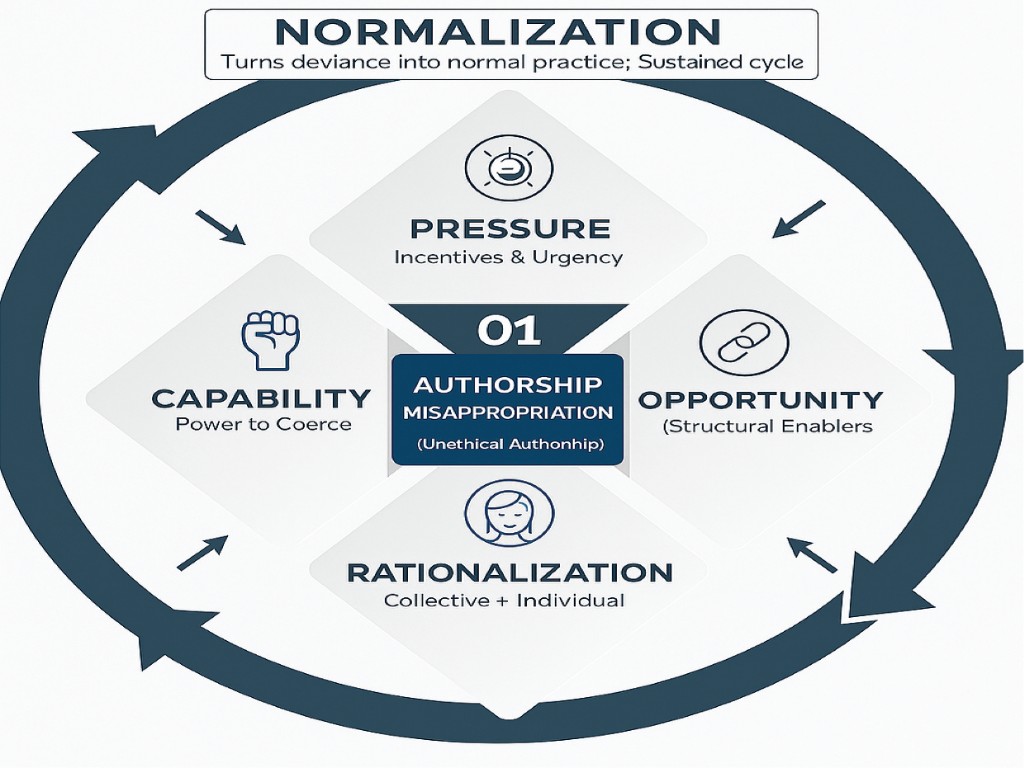
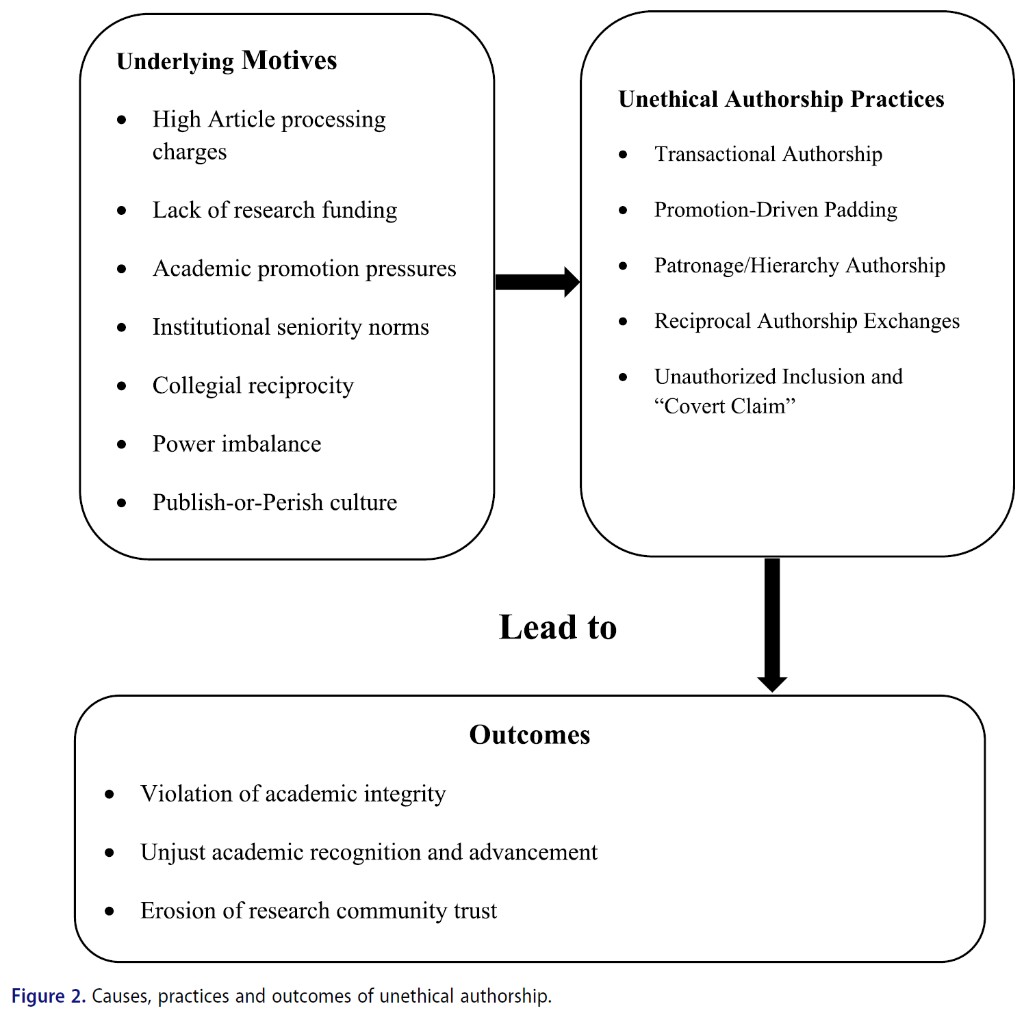
Not only does the practice distort the contributions of research, but it also continues to perpetuate inequality where junior researchers and the actual contributors are, most of the time, denied what they rightfully deserve. In the end, honorary authorship undermines the credibility of academic review, alters career paths as well, and endangers the quality of academic discourse.